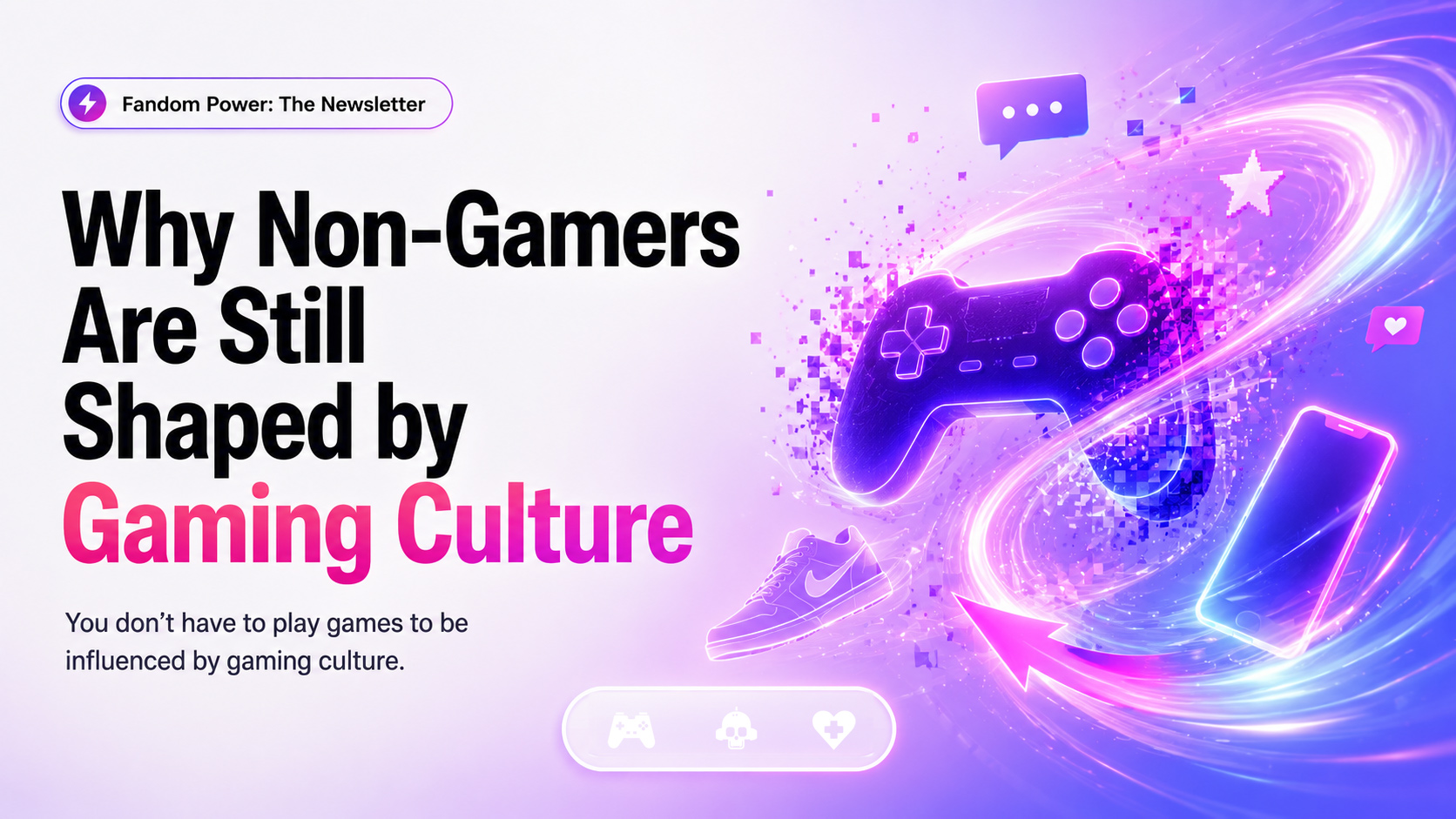
You don’t have to play games to be influenced by gaming culture.
In fact, many people who are influenced by it don’t identify as gamers at all. They might never pick up a controller, never switch on a console, never watch a Twitch stream. And yet, the way they shop, follow sport, engage with music, buy products, learn languages, or even read about culture online is increasingly shaped by systems that come directly from games.
Gaming has become one of the most influential cultural operating systems of the last two decades.
And once you see it, it’s hard to unsee.
Gaming is immensely popular, and it won by design
When people talk about gaming’s cultural impact, they often focus on scale. Player numbers, revenues, hours spent. And it makes sense because the numbers are huge. But the real influence isn’t just about how many people play, it’s about how gaming has trained an entire generation to understand the world.
Games taught us how to think in systems. How to read interfaces, how to track progress, how to optimise behaviour, and how to unlock status.
That gaming logic has now escaped the screen and influences countless aspects of the world around us.
You see it every time a clothing or sneaker brand talks about a “drop” rather than a release. Every time a fitness app frames improvement as levels, streaks, or milestones. Every time sport is discussed in terms of progression arcs rather than just wins and losses.
This is all game thinking. And it’s embedded so deeply it no longer feels borrowed.
UI language has become cultural language
One of the clearest examples is interface literacy.
People are now instinctively fluent in dashboards, meters, progress bars, notifications, and status indicators. At no point was any of this formally taught. We came to understand it because games normalised reading complexity at speed.
That literacy shows up everywhere. Spotify Wrapped (and every other variation of ‘Wrapped’ we now see) works because people understand visualised stats instantly. Social platforms reward behaviour through feedback loops that feel familiar, and comforting. Productivity tools, health apps, dating apps… they all borrow from gaming’s interface logic because users already know how to read it.
Gaming trained people to understand systems visually, emotionally, and intuitively. Everything else followed.
Progression thinking has replaced linear storytelling
Another shift is in the way people expect narratives to work.
Games don’t move in straight lines. They branch. They loop. They reward repetition. They allow failure without finality. You try, you learn, and of course, you level up.
That mindset has bled into how people engage with culture more broadly. Fans don’t just follow stories anymore, they track arcs, meta-narratives, side quests, and hidden layers. Music fandom talks in eras. Sports fandom obsesses over redemption arcs. Fashion culture follows creative directors like playable characters moving between worlds.
Progress is no longer about a single outcome. It’s about trajectory.
That’s a very game-native way of seeing the world.
Drops, scarcity, and the performance of timing
Gaming also reshaped how we understand access and value.
Limited-time items, seasonal events, and exclusive unlocks. These mechanics didn’t originate in sneaker culture or streetwear, they were perfected in games. The idea that when you show up matters as much as what you get is pure gaming logic.
Now, scarcity isn’t just economic. Scarcity is performative. Being early, being present, being “there when it happened” carries cultural weight. That applies as much to music releases and fashion drops as it does to games.
Non-gamers participate in this constantly, even if they don’t recognise the blueprint.
Why this matters for understanding fandom
Fandom today isn’t passive, and gaming culture is a really big reason why.
Games taught people that engagement changes outcomes. That participation matters. That systems respond to behaviour. So when fans show up in other spaces, like sport, music, film, fashion, they bring those expectations with them.
This is why audiences feel more demanding, more vocal, and sometimes more critical. They’re not just reacting emotionally, they’re interacting with culture the way games taught them to.
As a system to be navigated, tested, and sometimes pushed back against.
The cultural power of gaming
Gaming didn’t become culturally powerful just because it was loud or niche or cool. Away from the escapism and natural need for competition and progression (that’s another article, for another time) it became powerful because it taught people how to understand progress, status, participation, and reward. And then those lessons travelled everywhere else.
When we talk about gaming’s influence, we shouldn’t ask who plays. We should ask who thinks like a player.
Because the answer is… almost everyone.
You can follow more of my writing on Fandoms & Pop Culture:
Linkedin (Free Newsletter): Fandom Power
Substack Premium Newsletter: Fandom Power: Signals
Lets Talk!
If this resonates, I help brands act on exactly this kind of thinking — let’s talk