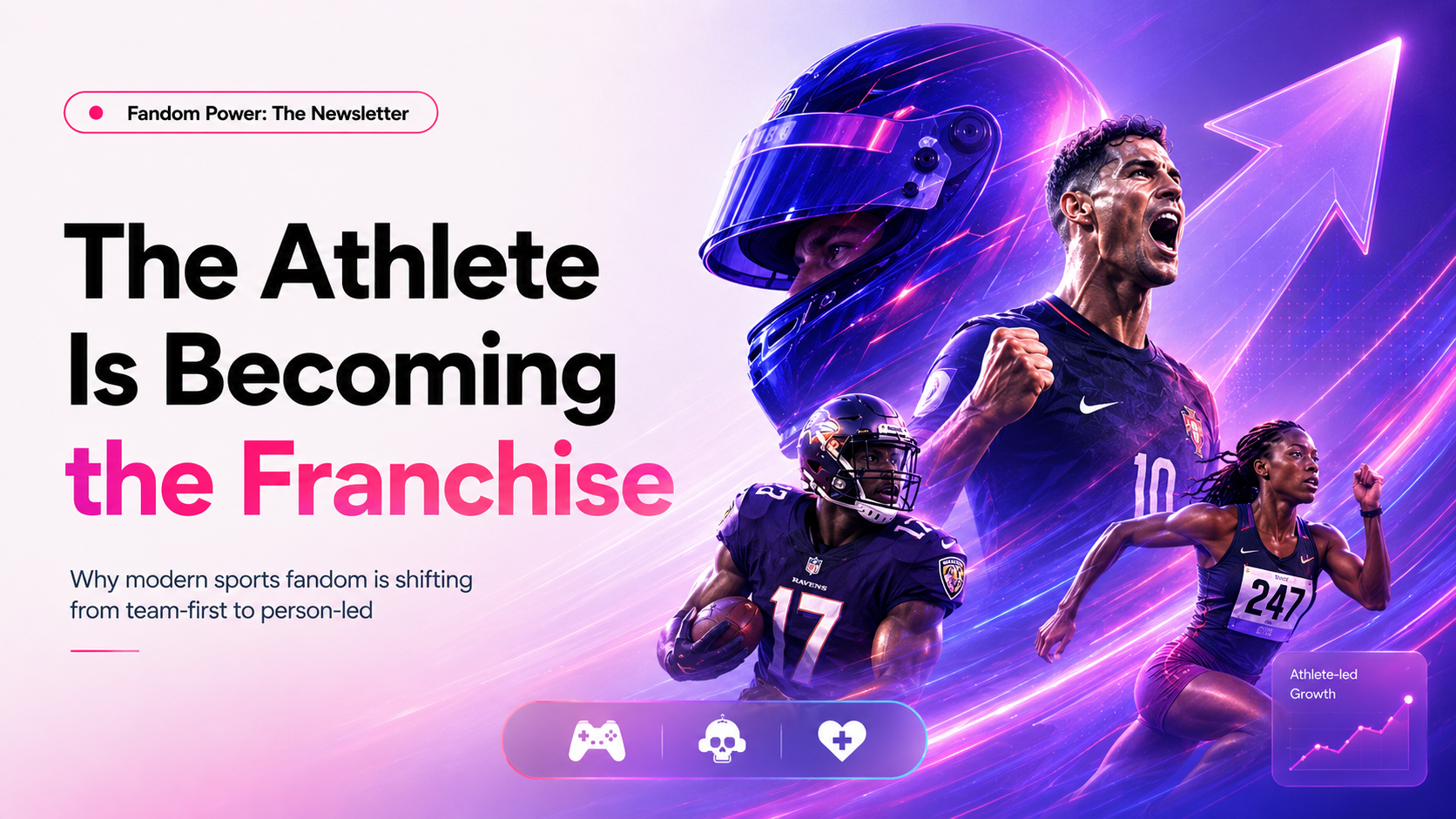
Why modern sports fandom is shifting from team-first to person-led
Team loyalty still matters. But in today’s social-first sports culture, athletes are increasingly becoming the entry point, the story engine, and the commercial center of fandom.
For years, sports fandom ran on a simple hierarchy: team first, player second. The crest was permanent; the athlete was temporary. Fans might adore a star, but their identity lived with the badge.
That is still true, up to a point. But it is no longer the whole story.

What is changing now is not that team fandom has disappeared. It is that athlete-led fandom is becoming far more powerful, portable, and visible than it used to be. In Britain, YouGov’s 2025 Star Power report found that team allegiance remains the biggest overall driver of sports fandom. But it also found that 22% of British sports fans have started following a new sport because of a specific athlete, 19% have started following a new team, and 23% have started following a new league or tournament because of one. If a favourite athlete moved to another team in the same league, 20% said they would support that new team as well as their current one, and 5% said they would switch support entirely.
Among younger fans, the shift is much more pronounced. YouGov found that among 18–34-year-old British sports fans, 38% have started following a new sport because of a specific athlete, 43% a new team, and 44% a new league or tournament.
In other words, for younger audiences, athletes are not just representatives of fandom. They are increasingly the reason fandom starts in the first place.
This is why “the athlete is becoming the franchise” feels like the right frame for the current moment. Not because teams no longer matter, but because attention now travels with people. Half of British sports fans follow their favourite teams and athletes on social media, according to YouGov. GWI’s 2026 sports trends report takes that even further globally: 74% of sports fans use social media to follow or watch sports, and 70% follow athletes or teams on social.
The center of gravity is shifting from scheduled viewing to an ongoing stream of clips, commentary, reaction, and personality.
And social media naturally favors humans over institutions. Fans may still care about the result, but the content they engage with increasingly revolves around the person: highlights, routines, off-field life, interactions with other athletes, a point of view. YouGov found that among British sports fans, game highlights are the most popular type of athlete social content, but personal life updates and interactions with other athletes also rank highly.
That matters because it shows that athletes are no longer just performers inside the product. They are becoming media properties around it.

The shift is especially clear in women’s sports, where fandom growth is being shaped not just by rights deals and visibility, but by relatability, accessibility, and individual player narratives. Sky Sports said in 2025 that 80% of UK sports fans are interested in at least one women’s sport. Its accompanying report with Gemba says that rises to 85% among under-35s, and argues that the biggest addressable audience in women’s sport is the crossover fan who follows both men’s and women’s sport.
Just as important, the report says women’s sport growth will come from celebrating individual athletes and their achievements, highlighting talents and stories that feel exciting and relatable to fans.
That is a meaningful clue about where sports fandom is heading more broadly. Women’s sports are not growing simply because more inventory exists. They are growing because the fan relationship often feels more direct. The athlete is easier to connect with, easier to follow, and easier to understand as a person. In that environment, fandom becomes less about inherited loyalty and more about emotional proximity.

There is a commercial consequence to that. GWI says women’s sports fans skew younger: 16–24-year-olds are 18% more likely than average to follow women’s sports, and the largest slice of the audience is aged 25–34. Just as importantly, these fans are 53% more likely than average to recommend products to others.
That makes person-led fandom especially valuable. When fans feel attached to an athlete, they do not just watch. They share, endorse, recommend, and convert.
Then there is the community layer, which makes all of this feel continuous rather than event-based. Reddit said in 2026 that online communities are fueling always-on fandom across major tournaments, fast-growing women’s sports, and niche competitions. Among US sports fans who use Reddit, 88% engage in sports communities weekly, year-round; 72% seek community guidance on where to watch; and 50% say they watch more live sports because of those conversations. That is a very different model from the old broadcast-era idea of fandom as something activated mainly on match day.
So the real shift is this: teams still own history, but athletes increasingly own the relationship.
They are the discovery layer. They are the social layer. They are the commerce layer. They are often the reason a new fan enters the category at all.
The smartest sports brands, leagues, and rightsholders will not treat this as a threat to team fandom. They will treat it as the new architecture of fandom growth. Build the team story, yes. But invest much harder in athlete storytelling, athlete accessibility, and athlete-led community. Because in a social-first era, the athlete is no longer just part of the franchise.
They are increasingly becoming the franchise.
Sources
- YouGov, Star power: The role of individual athletes on sports fandom (UK report).
- GWI, Why Women’s Sports Matters for Brands.
- GWI, Global sports trends shaping the 2026 World Cup.
- Sky Sports / Sky Group, New research from Sky Sports looks at the role of Women’s sport fandom in the future of sports.
- Sky Sports / Gemba, The Role of Women’s Sports Fandom in the Future of Sports.
- Reddit Business, Sports Fandom Is Evolving: How Brands Win in Online Communities.
You can follow more of my writing on Fandoms & Pop Culture:
Linkedin (Free Newsletter): Fandom Power
Substack Premium Newsletter: Fandom Power: Signals
Lets Talk!
If this resonates, I help brands act on exactly this kind of thinking — let’s talk