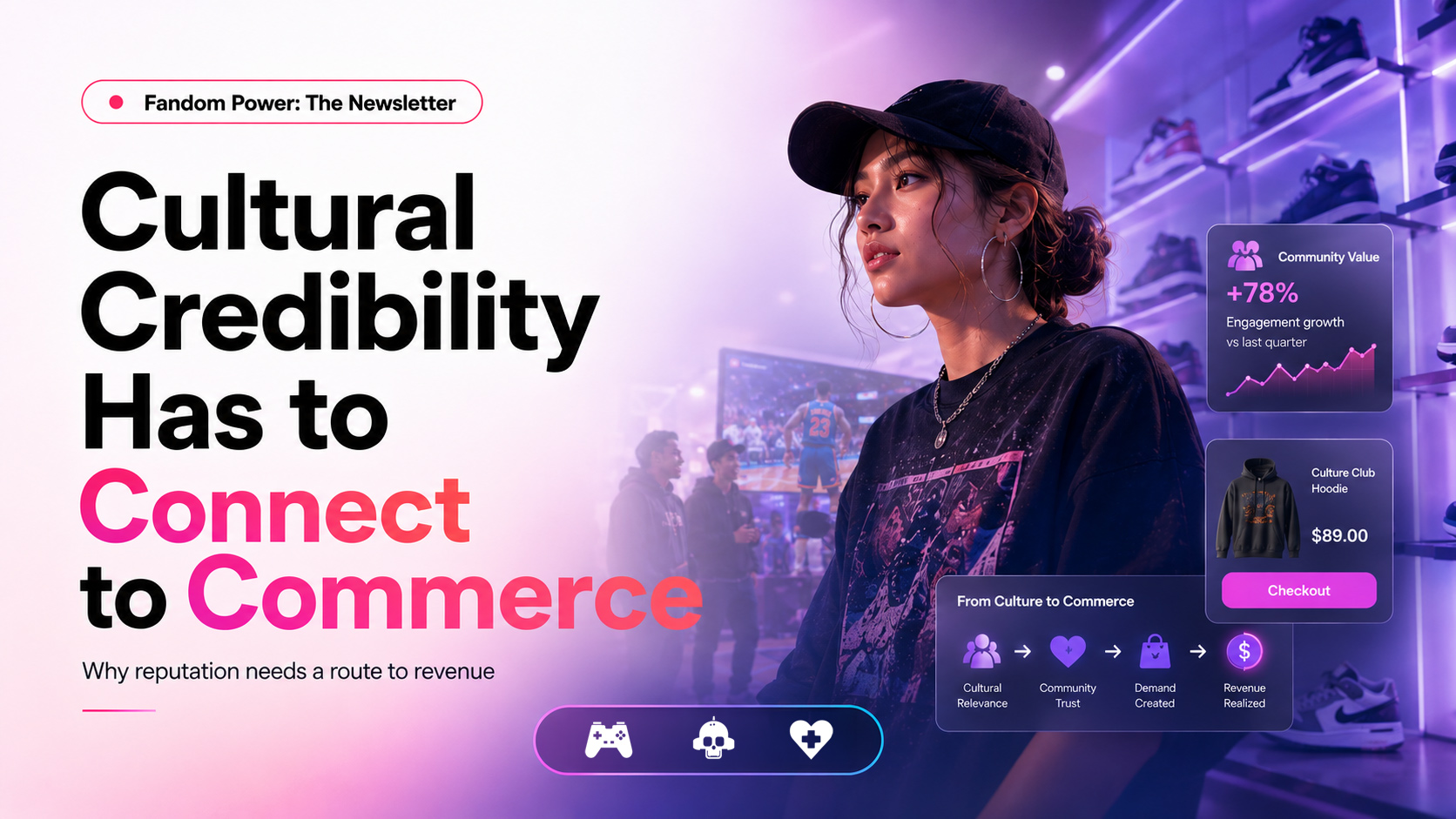
Why reputation needs a route to revenue (or it stays a vanity metric)
It’s very easy to become “liked” in culture right now.
A brand can land a witty post, get praised for a collab, pick up some earned media, even become a reference point in a niche community… and still not change its business trajectory at all.
Cultural reputation is not the same thing as commercial strength. Not because culture doesn’t matter, but because reputation only becomes valuable when it has a clear pathway into behaviour.
The trap: mistaking applause for progress
There’s a particular kind of brand success that looks great from the outside and feels strangely hollow inside.
The work gets shared. People call it “smart.” (I’m looking at you Linkedin marketing crowd). The comments are kind. The brand feels present.
Then the quarter closes and the numbers don’t move….. at all.
That gap usually isn’t because the creative was bad. It’s because the brand didn’t build a bridge between being appreciated and being chosen.
Fandom makes this clearer than anything: appreciation is emotional. Purchase is practical. The move from one to the other needs design.
Why this happens
Most cultural wins are optimised for visibility and sentiment… the easiest things to achieve quickly. A moment lands, people feel something, and the brand gets credit.
But cultural attention has a short half-life unless it connects to one of three things:
- Identity — something I can adopt and carry
- Ritual — something I can repeat
- Utility — something that genuinely helps me
If a cultural moment doesn’t point toward any of those, it’s likely to remain a moment.
And that’s where a lot of “culture marketing” breaks down. It stops at recognition, then hopes recognition will magically convert later.
It’s all Fugazi!
Cultural marketing has a short half-life, unles it connects.
Audience vs fandom: why this matters more than ever
An audience can applaud you and never return.
A fandom behaves differently. Fandom is active. It creates its own meaning. It repeats. It defends. It tells other people where to go next.
The mistake brands make is building cultural work that earns fandom-level emotion… and then offering audience-level next steps. A link. A generic product page. A CTA that feels like a gear shift from “we get you” to “now buy.”
Fans feel that whiplash instantly.
If you want reputation to become revenue, the “next step” has to feel like a continuation of the story… not a sudden transaction.
What “a route to revenue” actually looks like
This isn’t about turning every cultural moment into a hard sell. That’s how you lose the culture in the first place.
It’s about building participation pathways that let people move closer without breaking the relationship.
The strongest pathways usually take one (or more) of these forms:
Objects of belonging Not merch as inventory… merch as identity (see what I did there). Something that signals “I’m part of this,” even subtly.
Experiences that deepen attachment Events, access, behind-the-scenes layers, moments that turn interest into memory.
Membership and status that feel earned Not paywalls for the sake of it, but layers that reward continued participation.
Tools and templates fans can use Fans love things that make them better at the thing they care about: guides, kits, systems, formats.
The key is that each of these turns “I like this” into “I’m involved,” and involvement is where revenue becomes natural rather than forced.
The real test: does the culture change behaviour?
If you want to know whether your cultural reputation is doing real work, ask behavioural questions.
Do people come back without being re-targeted? Do they choose you when alternatives exist? Do they bring others in? Do they buy in ways that signal attachment (not just convenience)? Do they stay when the moment passes?
If the answer is no, you haven’t built a commercial bridge yet. You’ve built a cultural spike.
The takeaway
Cultural credibility is powerful, but it’s not the finish line.
It’s a form of capital. And like any capital, it needs to be invested into something that compounds: repeat behaviour, deeper participation, products people actually want to live with.
Otherwise reputation becomes nothing more than aesthetic. A kind of moodboard, or a highlight reel.
And the smartest brands right now are doing something simpler (and harder): they’re making sure every cultural win has a route into belonging… and belonging has a route into revenue.
You can follow more of my writing on Fandoms & Pop Culture:
Linkedin (Free Newsletter): Fandom Power
Substack Premium Newsletter: Fandom Power: Signals
Lets Talk!
If this resonates, I help brands act on exactly this kind of thinking — let’s talk